
The slowest way to start an EMF survey is a one-line enquiry: “Can you come and measure the fields in our building?” Before anyone can scope, quote, or book, the survey team has to come back and ask what the results are for, which rooms matter, and what’s running there.
A useful electromagnetic field (EMF) survey request answers those questions up front. It covers the decision the survey supports, the site and its drawings, the suspected sources and when they run, the criteria for judging results, any symptoms or earlier reports, access limits, and the deliverable you expect.
Each item is explained here, with a checklist at the end you can copy straight into your enquiry.

Explain the Decision the Survey Must Support
Start with the decision, because it shapes everything else: where to measure, which frequencies, for how long, and what the results get compared against. Most requests fall into one of four purposes:
- Exposure Assessment: Comparing measured fields in occupied areas with applicable human exposure guidelines.
- Equipment Siting: Checking whether a proposed room suits sensitive equipment, such as imaging systems, electron microscopes, or lab instruments, before it’s installed.
- Interference Investigation: Tracking down the cause of a problem that’s already happening, such as display distortion, image artifacts, or unstable instrument readings.
- Post-Mitigation Verification: Confirming that shielding, rerouting, or other changes achieved what they were meant to.
One survey can serve more than one purpose, but say so. EMF surveys planned for equipment siting and those planned for exposure assessment can use different instruments, locations, and criteria. Knowing what an EMF survey measures helps you frame the request in terms the survey team can act on.
Share the Site Location and Relevant Drawings
The survey team needs to know where it’s going and what it’s looking at. Useful details include:
- Address and Building Details: The site address, building name, and the floors or areas involved.
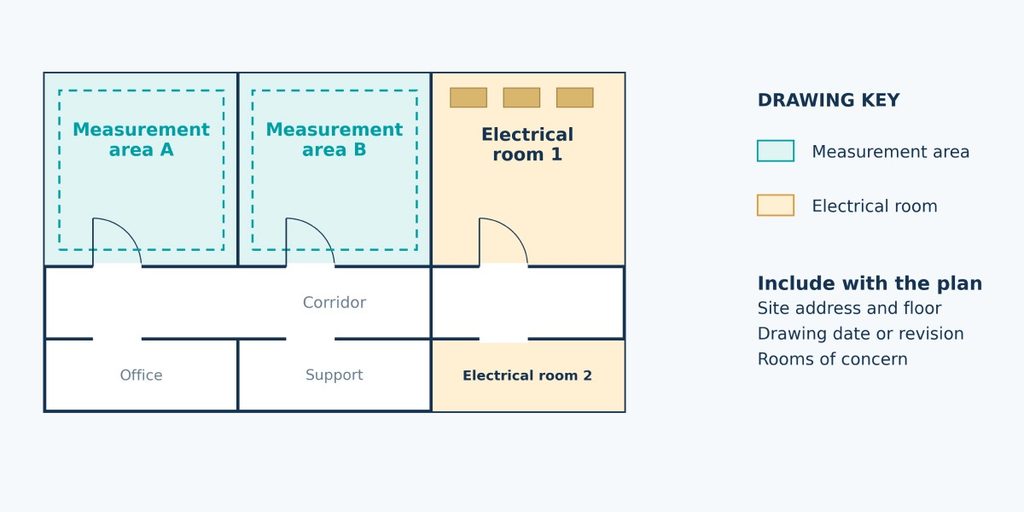
- Floor Plans: Current architectural plans, ideally with room numbers and uses.
- Equipment Positions: Where sensitive equipment sits now or will be installed.
- Electrical Spaces: Locations of electrical rooms, transformer vaults, risers, and main feeders, from electrical drawings where available.
- Measurement Areas: The specific rooms, zones, or points you need assessed.
Missing drawings don’t have to stop the process. Older buildings often lack current plans, and a walk-through, marked-up sketches, or photos of room layouts can fill the gap. Say what’s available and what isn’t, so the team can allow time to document the site during the visit.
Identify Sources, Frequencies, and Operating Schedules
Tell the survey team what you already know or suspect is nearby. Relevant sources might include:
- Transformers and Electrical Rooms: Including those on other floors or in neighbouring properties.
- Feeders and Busways: Main electrical runs passing through or beside the area of interest.
- Drives and Large Motors: Variable-speed drives, elevator machinery, and mechanical plant.
- Transit Infrastructure: Nearby subway, light rail, or streetcar lines, some of which run on direct current (D.C.) traction power.
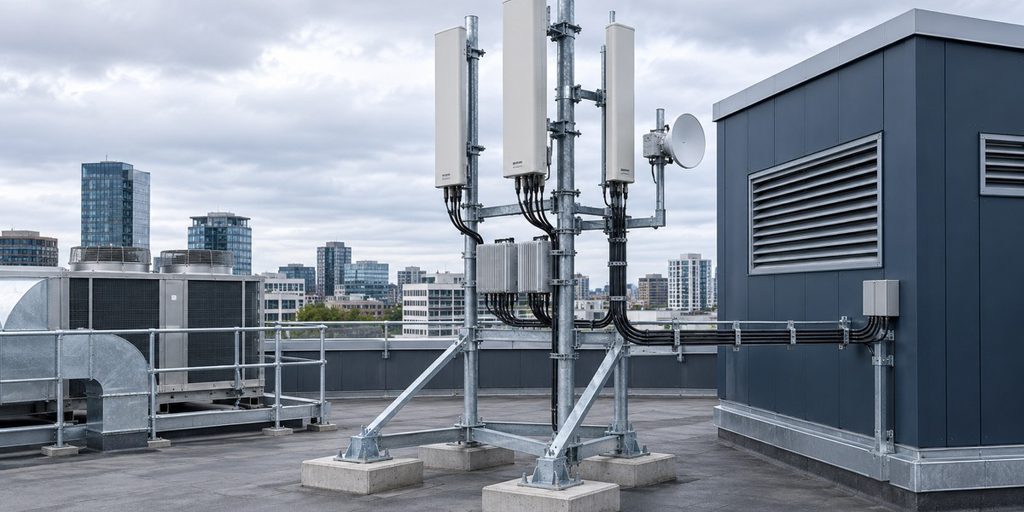
- Radio Frequency (RF) Transmitters: Rooftop antennas, nearby broadcast or cellular sites, and two-way radio systems. Licensed radio stations in Canada can be searched by geographic area in the federal spectrum database.
Operating context matters just as much as the list. Share typical loads, switching states, and the times key equipment runs, such as production shifts, elevator peaks, or chiller cycles.
Don’t assume one instrument covers everything. Alternating current (A.C.) magnetic fields at power frequency, static field disturbances, and RF signals each need different equipment, so a good source list helps the team bring the right kit.
Provide the Criteria and Existing Evidence
Results only mean something when they’re compared with the right benchmark. Send whatever applies:
- Manufacturer Limits: Siting specifications for sensitive equipment, usually found in the vendor’s pre-installation documents.
- Project Criteria: Limits set in a specification, owner’s standard, or design brief.
- Previous Reports: Earlier surveys, commissioning tests, or modelling studies for the site.
- Observations: Staff notes on when and where problems occur.
Keep equipment interference and human exposure separate in your request, because they use different criteria. In Canada, RF exposure is addressed by Safety Code 6, which covers 3 kHz to 300 GHz. Power-frequency fields from wiring and electrical equipment fall below that range. For those, Health Canada points to international guidelines for extremely low frequency fields, while an equipment specification is a separate benchmark again.
Describe Interference Symptoms Clearly
If something is already going wrong, a clear description saves time on site. For magnetic resonance imaging (MRI) suites, EMF interference studies begin with the symptom and work back to the source, so the more context you provide, the faster that goes. Describe what happens rather than what you think causes it:
- What You See: The type of artifact, distortion, error message, or reading drift.
- When It Happens: Timestamps of affected scans or events, and whether the problem is constant, intermittent, or tied to certain times of day.
- What Else Was Running: Nearby equipment, elevator use, vehicle movements, or construction at the time.
- What’s Been Tried: Service visits, settings changes, or equipment swaps, and what changed.
Photos of an artifact help, but they can’t identify a cause on their own. The same visible symptom can come from very different sources, so timestamps and operating context matter more than the image. Manufacturer siting drawings already treat nearby feeders and large A.C. systems as a reason for an interference study, so include the scanner’s siting documents if you have them.
Not every problem is electromagnetic. Understanding electromagnetic interference in buildings helps separate field-related issues from network, grounding, or equipment faults.

Confirm Access, Safety, and Practical Restrictions
Practical details often decide whether a survey runs smoothly. Confirm these before the visit:
- Permissions: Who authorizes the visit, and whether landlords or neighbouring tenants need notice.
- Escorts: Whether staff must accompany the team in secure, clinical, or industrial areas.
- Restricted Rooms: Spaces with special entry rules, such as MRI zones, cleanrooms, or electrical rooms.
- Production Constraints: Times when work can’t be disrupted, or when the survey team’s presence would affect operations.
- Approved Equipment States: Which systems will be running, idle, or off during the visit, as agreed with operations.
Don’t alter electrical systems just to prepare for a survey. Switching off circuits, moving loads, or shutting down equipment can create safety risks, and it also changes the very conditions being measured. Any operating changes should be planned with the facility team and made by authorized staff.
Agree on Deliverables and Project Timing
Decide what you need to receive before the visit is booked, since it affects how long the survey takes and how it’s done:
- Baseline: A record of current conditions to compare against future changes.
- Spatial Map: Readings across a floor or room, presented on your plans.
- Logging: Measurements over hours or days to capture changing loads.
- Comparison with Criteria: Results judged against the limits you supplied.
- Design Input: Recommendations for siting, layout, or mitigation.
Some questions can’t be answered by measuring today’s site. When proposed transformers, feeders, or equipment need assessing before they exist, magnetic field analysis can model them from drawings and expected loads. Measurements of existing conditions can then serve as the model’s starting point. It’s the same approach used for magnetic field analysis in engineering projects more broadly, where assumptions are stated alongside results.
Share key dates too: design deadlines, equipment delivery, construction milestones, or occupancy. A siting survey is most useful before layouts are fixed, and verification needs to happen after work is complete but before handover. If RF signals are part of the concern, ask whether separate RF field surveys are needed, since they use different instruments and methods.
Use This EMF Survey Information Checklist
Pulling everything into one message makes your EMF survey request quick to scope and quote. Include:
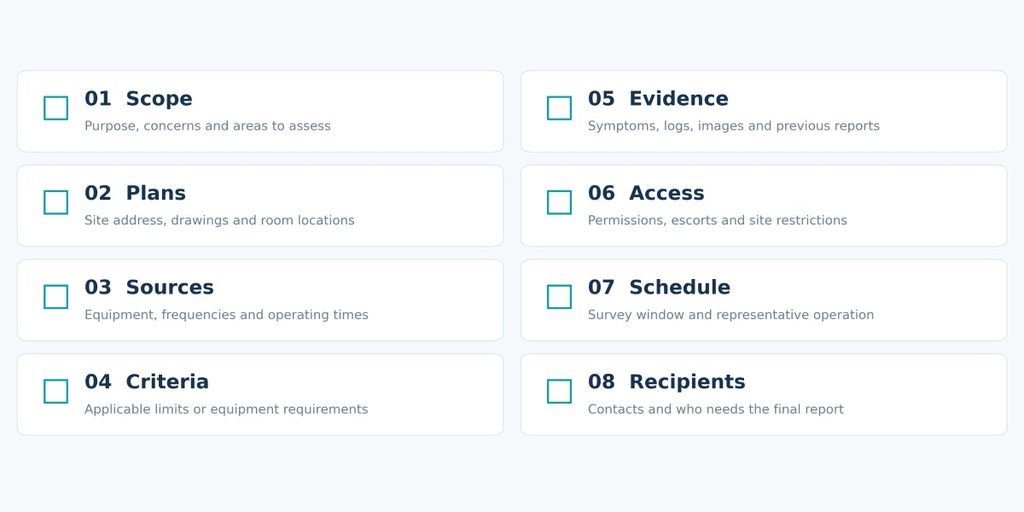
- Scope: The decision the survey supports and the areas to be assessed.
- Plans: Address, floor plans, electrical drawings, and equipment positions, or a note on what’s missing.
- Source Details: Known or suspected sources, frequencies of concern, and operating schedules.
- Criteria: Manufacturer limits, project specifications, or the exposure guidelines that apply.
- Evidence: Previous reports, symptom descriptions, and timestamps.
- Access: Permissions, escorts, restricted areas, and approved equipment states.
- Schedule: Preferred dates, project milestones, and when you need results.
- Report Recipients: Who should receive the report, and in what format.
A complete enquiry lets the survey team plan the right visit the first time and hand back results that answer your actual question. When you’re ready, contact C-INTECH with your checklist, even if a few items are still unknown.
Frequently Asked Questions
1. Can one survey report cover several buildings in a portfolio?
It can, as long as the scope and conclusions identify each assessed location separately. Results from one building can’t automatically represent another, because sources, layouts, and operating patterns differ. For portfolio-wide conclusions, plan measurements at each site or agree in advance how representative sites will be chosen and labelled.
2. Should the original measurement data be included in the commission?
If you’ll need it later, yes, so agree on it before booking. Settle data ownership, file format, how long records are kept, and access to supporting material such as field notes and photos, since these matter for future comparisons.
3. Can a property seller’s earlier report be relied on by a new buyer?
Not automatically. The report was written for a specific client and purpose, may carry reliance terms that limit who can use it, and reflects conditions at the time it was done. A buyer should check its date, purpose, and relevance, and ask the original provider whether reliance can be extended or a new survey is needed.
4. Can an EMF survey establish responsibility for a neighbour’s equipment?
No. A survey can record field levels and suggest likely sources based on technical observations, but legal liability is decided through other processes. It also doesn’t give anyone the right to enter a neighbouring property, which still requires the owner’s permission.
5. Should the enquiry be sent directly to an insurer or regulator as well?
Only if your purpose or an applicable process requires it. Decide who receives the report based on why you’re commissioning it, and tell the provider; the survey provider doesn’t automatically notify insurers, regulators, or other third parties.
6. Is a survey report a medical assessment?
No. An EMF survey measures environmental fields at specific times and places, and it can’t diagnose health conditions. Anyone with health concerns should speak with a physician or other healthcare professional, who can decide whether the measurements are useful background.
